
Why Do We Exercise the Way We Do? The fitness scripts that stick with individuals — and the paradox they create in the collective chorus
Why do we exercise the way we do? These four scripts — aesthetics, discipline, health, and play — shape not just our routines but our culture. Yet at scale, the paradox grows sharper: more gyms, apps, and influencers than ever, and still rising obesity and inequality.
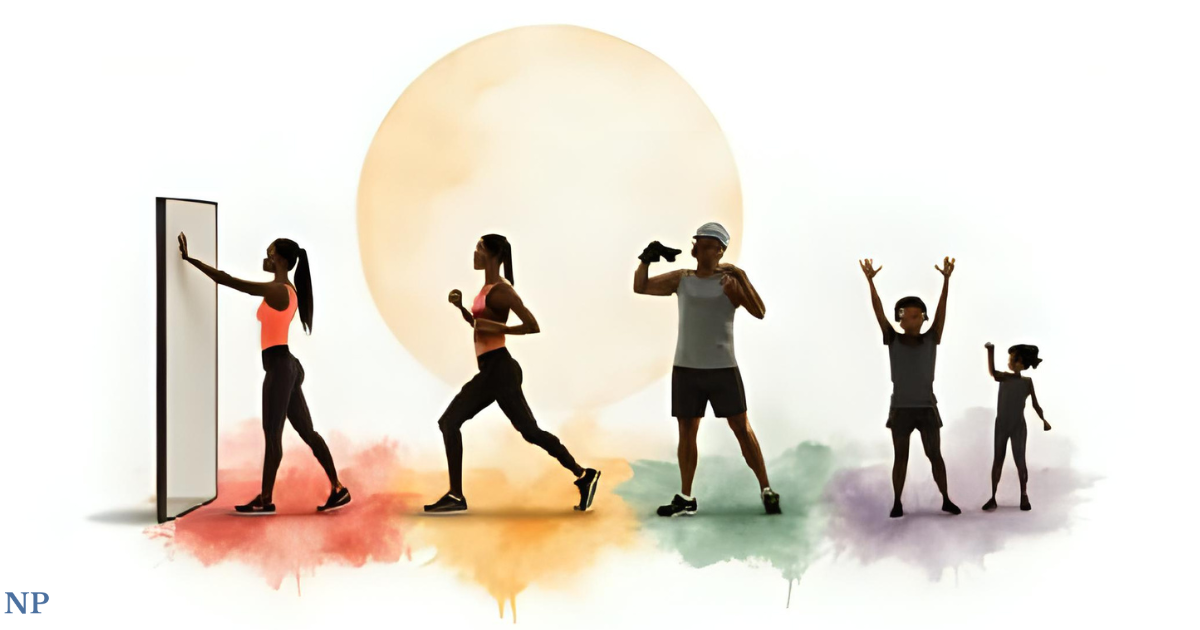
The other evening we had old friends over for a summer BBQ — another couple much like us, same stage of life, same two-kid chaos. As the kids tore across the lawn, we clinked sugar-free kombucha and settled into the patio breeze.
“You look gorgeous in that dress!” I told my friend, noticing how much slimmer she looked. She beamed. “Reunion’s in a month,” she said, swiping to her new trainer — a shredded bodybuilder with motivational captions under every photo. “I don’t enjoy working out, but he pushes me. It’s the only way I’ll stick to it.”
Her husband scanned the yard with his usual sigh: “This lawn is wasted. Perfect pickleball court right here.” He’s a fanatic, always trying to lure my husband into a match. My husband only grinned and brushed soil from his hands — his idea of exercise is digging in the garden, not chasing a ball.
Then there’s me. Exercise isn’t special or negotiable; it’s woven into my routine like brushing my teeth. I’ll squeeze in 40 minutes at the office gym between meetings or grab a loop band at home for a quick calisthenics set.
None of us convinced the others to change. We laughed, refilled plates — and the question lingered: why do we exercise the way we do?
The Narratives & Their Impact on the Individual
That backyard conversation wasn’t just quirks; it was a living diagram of four scripts that shape how we move. We borrow them from culture, medicine, marketing, and memory — then graft them onto identity. Some stick, some chafe, and each explains why exercise feels necessary… or fraught.
Aesthetic / Weight — “I move, therefore I look.”
My friend with the reunion trainer belongs here. It’s the story diet culture sells and social feeds turbocharge: sweat equals size, and size equals worth. It’s also the most common story we tell ourselves — nearly half of U.S. adults cite weight loss as their main reason to exercise [1].
As a starting spark, aesthetics works. Appearance-based goals drive more workouts in the first months than health or enjoyment [2]. But the fuel burns fast. A year later, dropout is higher among appearance-driven exercisers, while health- or enjoyment-driven folks are still going [3]. The psychology bites too: appearance-focus correlates with body dissatisfaction and harsher self-talk [4]. Hit the target and the finish line moves — five pounds becomes ten; the dress fits, then something else needs “fixing.”
The contrast in long-term outcomes can be stark. On one end: The Biggest Loser. Six-year follow-ups found 13 of 14 contestants regained much of the weight — some all of it — despite dieting and exercise. Resting metabolic rates dropped by ~500 kcal/day and didn’t fully rebound [5]. Biology pushed back; punishing routines never became a livable way of life.
On the other end: my friend. The aesthetic spark lit the fuse, but the story evolved. Her workouts were challenging, not punishing; they fit the week. Months after the reunion she was still showing up — because “I need to look good” had become “I’m someone who trains.”
Discipline / Identity — “I am what I train.”
This is me: 6 a.m. lifts before back-to-back meetings; dumbbells lined up on the closet floor. Exercise isn’t an event; it’s a rhythm. Skipping feels like skipping a meal.
Plenty live by this script: runners, lifters, yogis. Consistency becomes currency, streaks sacred, gaps guilt-inducing. Culture loves it: “No days off.” “Rise and grind.” Morning gym selfies, Strava miles, corporate badges for step streaks. That's why I always bump into the same people at the hotel gym during business trips - those of us who prefer a workout over sleep to fight off the jet lag. Discipline gets framed as moral worth — a shorthand for the “high performer.”
The strength of this narrative is also the risk. Strong exercise identity predicts adherence — and can border on brittleness. Miss a week and it’s not a lapse; it’s a crack in who you are. Research links high exercise identity to both consistency and unhealthy perfectionism/compulsive patterns [6,7]. In workplaces, it can morph into social currency that subtly elevates the visibly athletic and marginalizes others. What begins as self-care can harden into a status cue.
Health / Longevity — “I move, therefore I last.”
This is my husband’s lane. No PRs, no mirror checks — just blood pressure, energy for the kids, hiking in his seventies. Yard work counts as steps, and it feels productive.
It’s rational and evidence-backed: 150 minutes of moderate activity weekly reduces chronic disease risk; regular movement cuts CVD by up to 35% and type 2 diabetes by ~40% [8]. Even modest activity is linked to 3–7 extra years of life [9].
And yet, behaviorally, it’s fragile. “Prevent diabetes in 20 years” won’t get you off the couch tonight. Health-driven exercisers are likelier to start but struggle to sustain without an emotional or identity anchor [2]. The guidance itself can feel abstract: is walking the dog enough? Do chores count? Many think they’re active while accelerometers say otherwise [10].
That’s my husband: active in his head, <5k steps on a tracker; fit when the garden thrives, padded by a few winter pounds when it sleeps.
Play / Flow — “I move, therefore I enjoy.”
This is the kids’ script: run, climb, chase because it feels good — not because it “counts.” Adults glimpse it in pickup hoops, dance classes, weekend hikes, or a friend evangelizing pickleball like a religion.
Play is rarely glamorized, yet psychologists argue it’s the most sustainable. Self-Determination Theory shows intrinsic motivation predicts long-term adherence better than extrinsic goals like weight — or even health [11]. People who frame activity as fun are less depleted afterward and more likely to repeat it [12]. Large reviews echo the point: enjoyment is one of the strongest predictors of sticking with exercise [13].
The catch: joy can be sporadic — a tag game here, a hike there. Its power compounds when play becomes ritual: a weekly league, walking meetings, family bike nights. Blend fun with identity (“I’m someone who moves with friends”), and you get consistency and health.
When Narratives Scale — Finding Our Scripts in the Noise
The four scripts don’t stop at the individual. They scale — amplified by industry, enforced (or ignored) by policy, sustained (or stifled) by community. Over time, their balance has shifted with culture and circumstance, creating not just trends in how individuals move, but ripples across society.
1980s–1990s — The Aesthetic Wave
Fitness turned spectacle. Jane Fonda sold 17 million aerobics tapes; Richard Simmons brought glitter to daytime TV; Bally Total Fitness promised sculpted bodies and “no pain, no gain.” The aesthetic script — I move, therefore I look — fused with identity. Looking fit meant looking successful.
But the burden fell unevenly. Women, especially, bore the brunt: by the 1990s, nearly half reported body dissatisfaction, compared to about a quarter of men [14]. Health voices — the 1996 U.S. Surgeon General’s report, WHO’s early warnings — barely broke through. The paradox: more movement, but flashy, unsustainable, and stigmatizing.
2000s–2010s — The Health Turn
Governments reframed fitness as medicine. The U.S. codified “150 minutes a week” in 2008; WHO followed in 2010. Japan leaned on rajio taisō, China on National Fitness Regulations. Evidence was strong: regular activity cut disease and added years [8,9].
Consumers rebranded workouts as “wellness,” industry rushed to monetize with Fitbits, boutique studios, and corporate yoga. Grassroots programs like Parkrun thrived. Yet inequities persisted: SoulCycle for the affluent, sidewalks missing for the poor. Obesity kept climbing in the U.S. The health turn was progress — but fragile without scaffolding.
2010s–2020s — The Noisy Era
Social media democratized the mic. Influencers blurred scripts: six-pack challenges beside dance cardio, CrossFit tribes beside yoga flows. Millennials and Gen Z remix exercise as identity, play, or aesthetics.
Governments stuck with health mantras — WHO warned 1 in 4 adults were inactive — but only ~23% of U.S. adults actually met guidelines [15]. Meanwhile, boutique studios exploded into a $2.6B market, mostly for the urban affluent. Access seemed abundant; coherence and equity lagged. Obesity doubled, diabetes climbed. A fitness utopia that didn’t produce a fitter world.
2020s–Present — The Pandemic Shift
Then COVID hit. Gyms shuttered, playgrounds taped off, school gyms closed. The living room became the new studio: Peloton subscriptions quadrupled, YouTube workouts surged, Strava feeds overflowed. Exercise morphed into medicine and coping all at once. Inactivity was suddenly survival-linked — studies showed it predicted severe COVID more strongly than smoking or diabetes [16].
For some, hybrid work was a gift. No commute meant extra sleep, lunch-hour walks, or Zoom yoga in place of office chairs. Fitbit data even showed weekday step counts rising among remote-capable workers, who could more fluidly slot fitness into the day. For white-collar professionals with space and broadband, the pandemic rewired exercise into daily life with new urgency.
But for many, the opposite was true. Essential workers clocked long shifts with little flexibility. Families in small apartments lost both space and time to move. The digital divide cut deep: in 2020, 15% of U.S. households with school-age children had no internet access — closer to 60% among the poorest [17]. A UCLA study later found over 40% of low-income households still faced digital barriers, with Black and Latino families disproportionately affected [18].
The tide rose, but unevenly. For some, the pandemic lifted exercise into new routines; for others, it sank beneath stress, sedentarism, and closed-off spaces. COVID didn’t just change how we moved — it magnified who could move, and who could not.
My Verdict — Beyond Scripts, Toward Balance and Equality
That summer BBQ lingers in my mind: four friends, four ways of moving. One chasing a reunion body, one digging in the dirt, one evangelizing pickleball, one lifting at dawn. None of us wrong, none of us fully right — just voices in the same chorus.
Scaled up, those individual scripts become louder but also more discordant. Aesthetics burn bright but fade fast; discipline builds grit but can curdle into stigma; health promises prevention but feels abstract; play sustains joy but is too often dismissed. And at scale, these mismatched scripts don’t sing against silence — they collide with food systems engineered for overconsumption, neighborhoods without sidewalks, jobs that squeeze time, and inequities that leave whole communities without safe or affordable ways to move.
That’s why the paradox persists: never more gyms, apps, and workouts; never more chronic disease. Exercise matters, but it doesn’t explain everything. The problem isn’t just how we move, but the stage we’re moving on.
The task ahead isn’t to crown one script as “right,” but to compose harmony: health paired with structure, discipline with compassion, play with legitimacy, aesthetics with realism. And beyond the scripts, to tune the larger environment so that activity isn’t a privilege but a possibility — not just for the lucky few with time, money, or gardens, but for everyone.
Because movement is no longer just personal. It’s society’s chorus. And until we write a score that more voices can actually sing, the gap between who can move and who cannot will only grow louder.
Endnotes
[1] CDC (2021). National Health Interview Survey: Exercise and Weight Loss Motivations.
[2] Ingledew, D. K., & Markland, D. (2008). “The role of motives in exercise participation.” Psychology & Health.
[3] Teixeira, P. J., et al. (2012). “Exercise motivation, adherence, and outcomes: A 12-month longitudinal study.” Health Psychology.
[4] Markland, D., & Ingledew, D. K. (2007). “The relationships between body image and exercise motives.” Body Image.
[5] Fothergill, E., et al. (2016). “Persistent metabolic adaptation 6 years after ‘The Biggest Loser’ competition.” Obesity.
[6] Strachan, S. M., et al. (2011). “The role of exercise identity in behavioral consistency.” International Journal of Sport and Exercise Psychology.
[7] Hausenblas, H. A., & Symons Downs, D. (2002). “Exercise dependence: A systematic review.” Psychology of Sport and Exercise.
[8] WHO (2020). Physical Activity and Health Fact Sheet.
[9] Moore, S. C., et al. (2012). “Leisure time physical activity and life expectancy.” PLoS Medicine.
[10] Prince, S. A., et al. (2008). “A comparison of direct versus self-report measures for assessing physical activity.” International Journal of Behavioral Nutrition and Physical Activity.
[11] Deci, E. L., & Ryan, R. M. (2000). “Self-Determination Theory and the facilitation of intrinsic motivation.” American Psychologist.
[12] Segar, M., et al. (2011). “It’s not just exercise, it’s medicine: Framing physical activity as fun and well-being vs. weight loss.” Archives of Internal Medicine.
[13] Rhodes, R. E., & Kates, A. (2015). “Can the affective response to exercise predict future adherence?” Annals of Behavioral Medicine.
[14] Cash, T. F., & Henry, P. E. (1995). “Women’s body images: The results of a national survey.” Sex Roles.
[15] CDC (2018). National Health Statistics Report: Adult Physical Activity Adherence.
[16] Sallis, R., et al. (2021). “Physical inactivity is associated with a higher risk for severe COVID-19 outcomes.” British Journal of Sports Medicine.
[17] Pew Research Center (2021). Internet/Broadband Fact Sheet.
[18] UCLA Center for Health Policy Research (2021). Digital Divide and Low-Income Households Report.