They Still Do
The most generous thing someone can do is let you go before you're ready to thank them for it. Three departures across two decades — and the slow arithmetic of recognition that, eventually, arrives on time.
The word Anna used was "bittersweet."
I was sitting next to her at the table, two colleagues across from us, two more faces rectangled on the screen. When she said my name and began to speak, I smiled. I held that smile for the length of her announcement — through "instrumental," through "fantastic opportunity," through "bittersweet" — and only afterward, when the attention moved on, did I notice how stiff my face had become. Like I'd been wearing an expression rather than having one.
Bittersweet. It's a good word. It's the right word, technically. It's also a word that's been used so many times for this exact kind of moment — the warm send-off, the acknowledged loss — that it has worn smooth. It no longer catches on anything. I sat there thinking: there is no word yet for what this actually is. For what it means when the person who gave you your first opportunity, nine years ago, is also the person who told you, quietly, some weeks before this meeting, that it was time.
The announcement was the public version. There was another conversation. There always is.
The Airport
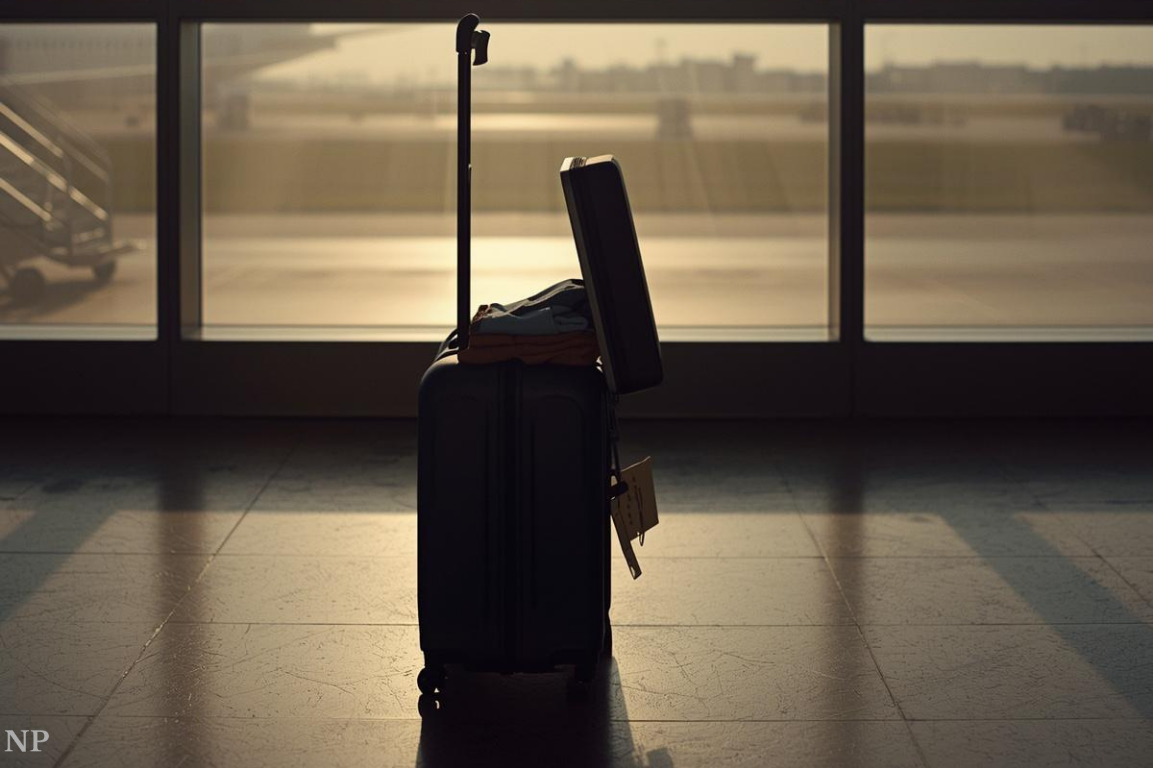
The airport was Huanghua International, in my hometown Changsha. End of summer, afternoon. The light came through the terminal windows in long blazing sheets — the kind that makes everything look both ordinary and final.
I had a new suitcase. We'd bought it together, my mother and I, and she had packed it herself. Every item folded, everything stacked with a precision that I understood even then was not really about the packing. It was the last thing she could do for me before I walked through a door she couldn't follow me through.
The flight to Hong Kong was two hours. It felt like a different century.
We had breakfast together for the last time. My mom looked pale — we had a long conversation last night, talking about the imaginary college life, until I drifted to sleep. When I woke up, my mom was already busy in the kitchen.
At the security checkpoint, I handed over my documents and moved forward. I didn't turn back. I was anxious, excited, already oriented toward what was ahead. That same departure repeated only three times across my college years. She never complained. I went to Switzerland one summer and Canada the next semester. I was too busy, I said, and she listened when I vented about complexities of a college life she had never had herself.
What I understand now, and didn't then: she was packing for a daughter who was not yet capable of receiving what she was giving. At eighteen, I had no apparatus for that kind of attention. The new world in front of me was louder than anything behind me, and she knew that. She packed anyway.
Gratitude wasn't available to me in that moment. It arrived later, in pieces — each time a hard stretch required me to find steadiness, and I found, waiting there, the memory of a carefully folded suitcase.
The Dining Hall
The last time I saw Dr. Gall before I left was in the dining hall of the Carnegie Institution, a few days before Christmas. The hall was nearly empty — most people already gone for the holidays. A handful of lab members, a colorful sheet cake, some homemade sweets he always brought this time of year. He was smiling, calm in the way he always was, and he said the things you say at these moments: wish you all the best, half-joking that I'd probably make more than him in the startup world.
But the real conversation had happened earlier.
I had come to him wanting to leave academia for industry — a decision that not everyone on my committee supported. He listened quietly. Then he told me, with the same calm, that my work was done, that my publications were sufficient, that I was ready. That I should do something I was passionate about. And then — and this is the part that still stays with me — he didn't just say it. He stepped in as my thesis committee member and made it structurally possible for me to go.
I was relieved — the unspoken expectation of an academic track for every graduate student in a prestigious research institution was taken away from my shoulders, and I was given the freedom to define my own path. That would not be possible without Dr. Gall, who himself was one of the most respected scientists in the field, cultivating a generation of highly accomplished scientists. Yet, he fought for me to break the institutional constraints that had framed his own life.
There is a difference between someone who believes in you and someone who acts on that belief at personal cost. Dr. Gall did both. The cake was cheerful. The room was almost empty. I don't think I understood, standing there with a plastic fork, what he had actually given me.
Anna
Anna gave me my first opportunity. That was nine years ago — which means she has known me through more versions of myself than almost anyone in my professional life. Through the early years of figuring out what I was doing, through immigration paperwork that required someone to put their institutional weight behind you, through the particular logistics of being a working mother that require a manager who doesn't just tolerate flexibility but genuinely builds it in. She did all of that. Not as accommodation. As investment.
Which is why, when she raised it in a different kind of conversation — multiple one-on-ones, weeks before the leadership team meeting, about what skill sets I needed to build, what directions I should consider — I believed her. Not because I wasn't afraid. But because she had spent nine years building the kind of credibility that makes encouragement land differently than it otherwise would.
The difference, this time, was that I understood what she was doing as she was doing it. I had not understood my mother at the airport. I had half-understood Dr. Gall. With Anna, the recognition was arriving on time.
She is the reason I stayed as long as I did. She is also the reason I left.
I've thought about why that doesn't feel like a contradiction. I think it's because the best kind of investment was never about keeping — it was always about building something strong enough to stand on its own. Anna didn't hold me in place. She held me together, until I was ready to go somewhere she wasn't. “I’m sure you will do an excellent job in your new role,” she said in the team meeting. What I took with me was that I would face difficulties I hadn't seen in this team — and that she believed I was ready to meet them in my own way.
And something has begun to happen that I did not expect. Mid-sentence, in a meeting with someone on my team, I will hear myself shape a thought in a particular way — a cadence, a framing, a kind of calm — and realize afterward that it wasn't mine. It was hers. I had absorbed it without noticing. Part of Anna is becoming part of me. This, too, is what nine years of her investment built.
What They Left Me
I've been thinking about what these three moments have in common. An afternoon airport in Changsha. A nearly empty dining hall three days before Christmas. A conference room with two faces on a screen.
Three different rooms. Two different decades. The same hidden structure underneath.
In each one, someone who had more reason to keep me chose instead to let me go. Not because they were done with me. Because they weren't. Because they had paid enough attention to know what I needed next and when was the right time to let go.
What that builds, over time, is not confidence exactly. It's something quieter and more durable. When the new situation is hard — and it always is, at first — and the self-doubt arrives on schedule, what I find myself drawing on is not my own certainty. It's theirs. The trust they extended before I had earned it. That becomes the thing you stand on when the ground feels uncertain. Not arrogance. Borrowed belief, held carefully, until it becomes your own.
And when I sit across from someone on my own team now — someone figuring out their next move, someone who might be ready for a door I can see more clearly than they can — I think of my mother's hands folding a suitcase. I think of a plastic fork and a sheet cake in an empty dining hall. I think of Anna, calm and certain, telling me it was time.
I try to see, for someone else, when it's time.
I didn't turn back at the airport that afternoon. But they came with me anyway. They still do.