Season 2 Preview — Big Things, Small Lives
Inflation, AI, miracle drugs — the headlines are huge. But the real story? How they sneak into our grocery lists, inboxes, and 3 a.m. thoughts.
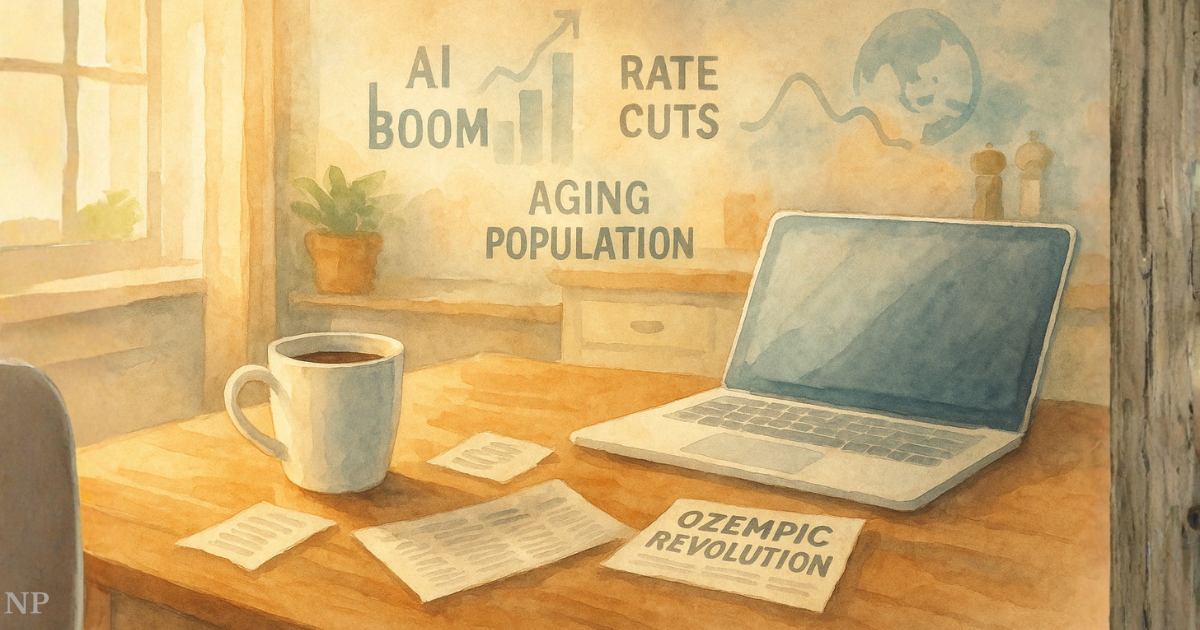
If Season 1 was about noticing the patterns hiding in laundry cycles and lunch breaks, Season 2 is about what happens when the big stuff — inflation, AI, longevity, miracle drugs — sneaks into those same cycles and lunch breaks.
In the past essays, we zoomed in: the bargains we chase, the calendars that run us, the bedtime negotiations that rival board meetings. In the coming essays, we’re zooming out — but just barely. Because even the global headlines of 2025 show up in miniature on our kitchen counters.
Rate cuts sound like something for economists, until you notice how they change dinner-table conversations about grocery bills and “maybe we should eat more at home.”
AI at work sounds futuristic, until it’s auto-completing your emails and quietly rewriting your job description.
The world feels more hopeful again — markets stabilizing, flights full — but the optimism is delicate, easily cracked by a headline or a sleepless night.
That’s why I’m calling this new arc “The Age of Fragile Optimism.”
Because beneath the big stories, the real test is how we live them: how global shifts translate into the micro-decisions of spending, scheduling, caring, and simply being.
As we wrap up the year 2025, we’ll talk about:
- How money behaves when inflation cools but anxiety doesn’t.
- How time bends when AI promises to give it back to us — and often just takes it differently.
- How family stretches between childcare and eldercare, across generations and continents.
- How self reshapes under new definitions of health, willpower, and control.
Season 1 was about making sense of life’s small systems.
Season 2 is about tracing how the big systems start to make — and sometimes unmake — our small lives.
See you next Saturday morning.
Bring your coffee, and maybe your curiosity about interest rates.