Inflation, Interest, and Illusions - How Fragile Optimism Became the Real Currency
From toilet paper to gold, our anxieties have simply changed packaging. Inflation tests how we feel about today; interest rates test how we imagine tomorrow. Between them lies the illusion that safety can be stockpiled — and the fragile optimism that keeps us believing anyway.

The other day, my husband and I were chatting about our investment portfolio.
“Do you think we should buy some gold?” he asked.
It wasn’t surprising — gold has been everywhere lately, gleaming across headlines as prices hit record highs.¹ What did surprise me was him: the same man who once calculated the unit price per square inch of toilet paper and refused to stock up unless it was on sale now pondering a commodity priced at a few thousand dollars an ounce.
What is going on?
In 2020, we fought over toilet paper — soft, practical, absurdly symbolic. Shelves emptied, prices spiked, and we told ourselves it wasn’t panic, just preparedness. It was the perfect inflationary object: essential yet precious, proof that control could still be bought in bulk.²
Five years later, the aisles are calm, but the instinct hasn’t changed. We’ve simply upgraded our anxieties. Today, it’s not toilet paper but gold — the new comfort commodity. Headlines track its climb, social media hums with “safe haven” tips, and dinner parties debate T-bill yields with the same fervor we once reserved for sourdough starters.³
The packaging has changed; the psychology hasn’t. When fear hits shelves, we hoard. When it hits spreadsheets, we hedge. Both reveal the same illusion — that safety can be stockpiled, that enough preparation can outwit uncertainty.
It may feel like emotional whiplash in recent years, but it’s hardly new if we zoom out — across borders and back through time.
Argentina and Japan — When Prices Rewrite Culture
Argentina: Inflation as a Way of Life
In Argentina, inflation isn’t an event — it’s an environment. The country has lived with high inflation for most of the past half-century, including bouts so severe that prices changed by the week.⁴ The result is less an economy than an ecosystem, where survival means adapting faster than money loses meaning.
Salaries arrive, dollars vanish, pesos erode before payday. Middle-class families rush to convert cash to goods by nightfall: sneakers, meat, electronics — anything that holds shape. Economists call it “velocity of money.” Sociologists call it exhaustion.
Making long-term plans is almost impossible. Mortgage rates can exceed 100%, putting homes out of reach for most.⁵ Even credit cards flip their logic: with prices rising nearly 8% a month,⁶ a short delay in payment can be an advantage. Shoppers buy now and pay later in devalued pesos — a quiet act of financial jiu-jitsu.
When one government tried to disguise inflation by faking the numbers, people stopped listening. They built their own unofficial price indexes, trusted their receipts over the news, and adjusted wages and savings accordingly.⁷ In Argentina, trust shifted from institutions to instinct.
Inflation didn’t just rewrite Argentina’s economy; it rewired its psyche. The future became a rumor. And on the other side of the world, Japan was living the mirror image — a nation paralyzed not by rising prices, but by the absence of them.
Japan: Deflation as a Quiet Decline
If Argentina’s story is one of fire, Japan’s is one of frost.
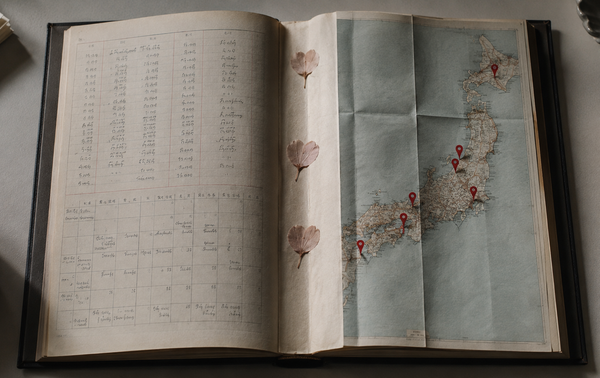
After its asset bubble burst in the early 1990s, prices fell — and then refused to rise again.⁸ What began as an economic slowdown hardened into habit. A generation came of age during the so-called “Lost Decades,” when waiting felt cheaper than acting.
In this world, thrift became both virtue and anesthetic. Consumers delayed big purchases — why buy a refrigerator today if it might be cheaper next spring? Companies froze wages to survive. Families hoarded cash in tansu yokin — literally, “drawer deposits.”⁹
The government tried to nudge optimism back into circulation. Interest rates fell to zero. “Abenomics” promised to jolt the economy awake. In 2017, Tokyo launched “Premium Friday,” a campaign encouraging workers to leave early once a month and spend. Few did.¹⁰ You can’t bribe a culture out of caution.
What defines Japan’s deflation isn’t the data — it’s the psychology. Once price stability becomes cultural, prudence turns patriotic. Businesses plan for stasis; households see restraint as responsibility. Even advertising softens its tone — less “buy now,” more “buy wisely.”
If Argentina’s inflation collapses time, Japan’s deflation stretches it thin. The present becomes a waiting room for a better tomorrow that never quite arrives. The illusion of safety here is not motion, but stillness — the comforting belief that by doing less, we lose less.
The United States — The Fed and the Theater of Trust
If Argentina’s story is chaos and Japan’s is caution, America’s is choreography.
Where others lost faith in their systems, the U.S. built its economy on belief itself — an unspoken contract that the Federal Reserve could balance fear and hope.
After World War II, that faith was fragile. Inflation spiked as wartime price controls lifted and pent-up demand surged.¹¹ The Fed’s job wasn’t just to manage prices; it was to restore confidence in the dollar — to prove that money still meant something. The lesson stuck. In America, stability became identity.
By the late 1970s, that identity cracked. Gas lines stretched for blocks, prices soared, and public trust evaporated. When Paul Volcker took over the Fed in 1979, he made a radical choice: raise interest rates above 20%, knowing it would trigger recession.¹² The move was brutal — but also theatrical. Volcker wasn’t just taming inflation; he was performing credibility. He made pain look like discipline, and in doing so, restored faith in the institution itself.
That act rewired American expectations. Through the 1980s and 1990s, the “Great Moderation” cemented the Fed’s image as omniscient — calm, technocratic, somehow beyond politics. Alan Greenspan’s pauses became market signals; Ben Bernanke’s reassurances steadied crises.¹³ Rate decisions were no longer just economic levers — they were emotional cues.
Then came the pandemic. For the first time in decades, the Fed’s authority collided with real-time emotion. Stimulus poured in, shortages erupted, prices spiked — and faith wavered. By 2023, inflation had cooled, but the damage was psychological: a generation that had never doubted the Fed suddenly did. Jerome Powell’s press conferences became collective therapy sessions, his tone dissected like scripture for signs of reassurance.¹⁴
What makes the U.S. unique isn’t that the Fed controls inflation perfectly — it’s that people still believe it can. In Argentina, trust died of excess. In Japan, it froze from inertia. In America, it thrives through performance. Rate cuts still work because belief does.
2025 — When the Noise Outpaces the Signal
By 2025, the charts say one thing and the checkouts say another. Inflation has cooled, at least officially. Interest rates are edging down. Markets cheer; headlines hum with relief. But the collective mood? Still tight, still tired, still scanning for the next shoe to drop.
The data says recovery; the dinner table says disbelief. Consumer sentiment lags far behind the metrics — a phenomenon economists have nicknamed the “vibecession.”¹⁵ It’s not that people misunderstand the numbers. It’s that they no longer trust them. We hear the cheers about U.S. inflation hovering near 3%, closing in on the pre-pandemic 2% range, but eggs and milk still cost twice as much as before.
Transparency was supposed to solve this. Every Fed meeting is livestreamed, every statement analyzed within seconds by journalists, influencers, and trading algorithms. The institution once shrouded in mystique has become the most scrutinized stage in the world — and yet, paradoxically, less convincing for it.
In the era of hyper-information, meaning fractures.
Politicians weaponize inflation data.
YouTubers decode Powell’s facial expressions.
TikTok pundits explain rate cuts in 15 seconds, each promising “what they’re not telling you.”
When every voice competes to interpret the signal, the signal stops sounding like truth and starts feeling like opinion.
It’s not that the Fed has lost control; it’s that the crowd has found a megaphone. The story of the economy used to be told from a podium. Now it’s written in real time by millions of voices, each narrating their own version of reality.
Trust hasn’t vanished — it’s been dispersed. And when everyone’s a narrator, the plot inevitably falls apart.
Fragile Optimism — The Illusion That Holds Us Together
For all our models and markets, the economy still runs on something that can’t be charted: faith.
Faith that the Fed knows what it’s doing. Faith that the numbers mean what they say. Faith that tomorrow will behave roughly like today.
It’s what made the American system so resilient for so long — the unspoken agreement that trust itself was a stabilizer. You could raise rates, lower rates, swing between optimism and panic, but as long as people believed the system could hold, it usually did.
But belief has its own inflation cycle.
After decades of managing expectations, the Fed is no longer just a central bank — it’s a national mood board. Each rate cut promises relief; each pause, restraint. The performance matters as much as the policy. When we can’t find clarity in data, we look for tone, reassurance, choreography.
The trouble is, the choreography has grown crowded. Everyone has joined the dance — media, markets, memes. And somewhere in that swirl, the quiet trust that once bound people to institutions has thinned.
We still look to Jerome Powell like a pilot in turbulence — calm voice, steady instruments — but our knuckles are white. We want to believe the plane is level. Yet outside the window, the clouds of noise make it hard to tell what’s weather and what’s signal.
Inflation governs how we feel about today; interest rates govern how we imagine tomorrow. The illusion is that either can restore trust on their own.
Maybe this — fragile optimism — is the new equilibrium: not blind faith, not cynicism, but the cautious, collective decision to keep believing anyway. To assume that even if the world feels rigged or random, it still deserves effort, and maybe a little grace.
Because trust, like money, only holds value when enough of us keep using it.
I may still complain that eggs cost twice as much as before, but I’m grateful I can serve them sunny side up for my boys at breakfast. What we need in turbulence is a simple reminder: I wake up every morning believing today is going to be better than yesterday.
Endnotes
- Bloomberg News (2025). Gold Prices Surge to Record Highs as Investors Seek Safety.
- Bureau of Labor Statistics (2021). Consumer Price Index Summary: Pandemic Supply Disruptions.
- The Economist (2024). Safe Havens and the Psychology of Financial Fear.
- International Monetary Fund (2024). Argentina: Annual Inflation and Economic Outlook.
- Reuters (2023). Argentina Mortgage Market Shrinks Amid Triple-Digit Interest Rates.
- Central Bank of Argentina (2024). Monthly Inflation and Exchange Rate Bulletin.
- Cavallo, A. (2013). “Online and Official Price Indexes: Measuring Argentina’s Inflation.” Journal of Monetary Economics.
- Hayashi, F., & Prescott, E. (2002). “The 1990s in Japan: A Lost Decade.” Review of Economic Dynamics, 5(1).
- Bank of Japan (2016). Household Survey on Cash Holdings.
- Ministry of Economy, Trade and Industry (2018). Premium Friday Campaign Review.
- Bureau of Labor Statistics (2020). Historical CPI for All Urban Consumers, 1913–2020.
- Federal Reserve Board (1983). Monetary Policy Report to Congress.
- Bernanke, B. (2004). “The Great Moderation.” Remarks at the Eastern Economic Association.
- The Wall Street Journal (2023). Powell Faces the Fed’s First Crisis of Confidence in Decades.
- University of Michigan (2025). Consumer Sentiment Index: Long-Term Trends.