
From Rice Bowls to Mushroom Elixirs — The Scripts Our Food Still Writes
From rice bowls to mushroom elixirs, our plates have always carried more than calories. Food scripts our identity, our science, our survival—and now our future. The question is no longer what to eat but what story we want our meals to tell.
My husband and I were strolling through our neighborhood MOM’s Organic Market when my eyes lit up at a sale sign: Alive Ancient Mushroom Elixir. I grabbed three bottles, savoring the sleek glass and the promise of “your macro-dose of mushroom magic.”
“What on earth is that?” he muttered. One sip later, his nose wrinkled. “Well, that’s the last time I’ll taste it.”
I clutched my bubbly, tangy elixir and laughed. But as I sipped, I wondered: was this just a matter of taste buds—or were we following entirely different scripts about what food means?
Food as Identity — From the Self to the Sacred
My husband teases me that I eat “for the feel, not the stomach.” He’s not wrong. I get a quiet jolt of pride when I pass up a pastry for breakfast, toss organic kale into the lunch salad, or grill wild-caught salmon for dinner. Researchers studying “clean eating” find that these choices often get tied to self-esteem and moral satisfaction—as if healthy eating is a small act of discipline that proves worthiness.¹ Food here becomes a mirror: we use it to measure our own character.
But food doesn’t just define the self; it binds us to others. Being vegan, paleo, or keto isn’t only about nutrients—it’s about belonging to a tribe. Each group has its rituals (vegan potlucks, keto swaps), its language (“plant-based is kinder,” “macro hacks”), and its boundaries. Anthropologists call these foodways—shared practices that reinforce who belongs at the table.²
And this is not new. For centuries, food has marked the sacred: Muslims fast during Ramadan, Catholics take communion, Jews keep kosher, Buddhists embrace vegetarianism. These rituals remind us that food has always been more than calories. It scripts who we are—to ourselves, to our communities, and to something larger.
If identity tells us who we are, science insists on telling us how to eat.
Food as Science — When Meals Become Equations
Take my mushroom elixir: its promise rests not just on clever branding but on a veneer of science. And food science has done extraordinary things. Athletes time protein intake to optimize muscle repair. Marathoners carb-load to stretch endurance. Doctors prescribe diets to manage diabetes or lower blood pressure. In these contexts, science is life-extending, even life-saving.
But science also manipulates. The same precision that fuels athletes engineers ultra-processed snacks designed to hijack biology. Researchers call it the “bliss point”—the sugar-salt-fat ratio that overrides satiety and keeps us reaching for more.³ In the U.S., over half of daily calories now come from ultra-processed foods.⁴ What began as innovation became industrial weaponry.
And then comes the overreach—when meals become math. Food apps count calories to the digit, labels trumpet grams and percentages, powders and supplements promise perfect ratios. Roughly one in three American adults has logged food in a calorie-tracking app, a practice strongly linked to higher stress around eating.⁵ Psychologists warn of orthorexia, a disordered fixation on eating only what’s “pure.”⁶ The paradox is almost cruel—in trying to eat perfectly, health itself is sacrificed.
But long before apps and algorithms, humans ate for something simpler: survival.
Food as Fuel — Eating to Live
My boys remind me of this every day. When they’re truly hungry, pickiness vanishes; broccoli and pasta disappear with equal speed. My grandparents knew the same truth. A bowl of rice, a handful of greens, broth stretched with bones—these weren’t choices, they were necessities. Every grain carried weight, which is why I was taught never to waste one.
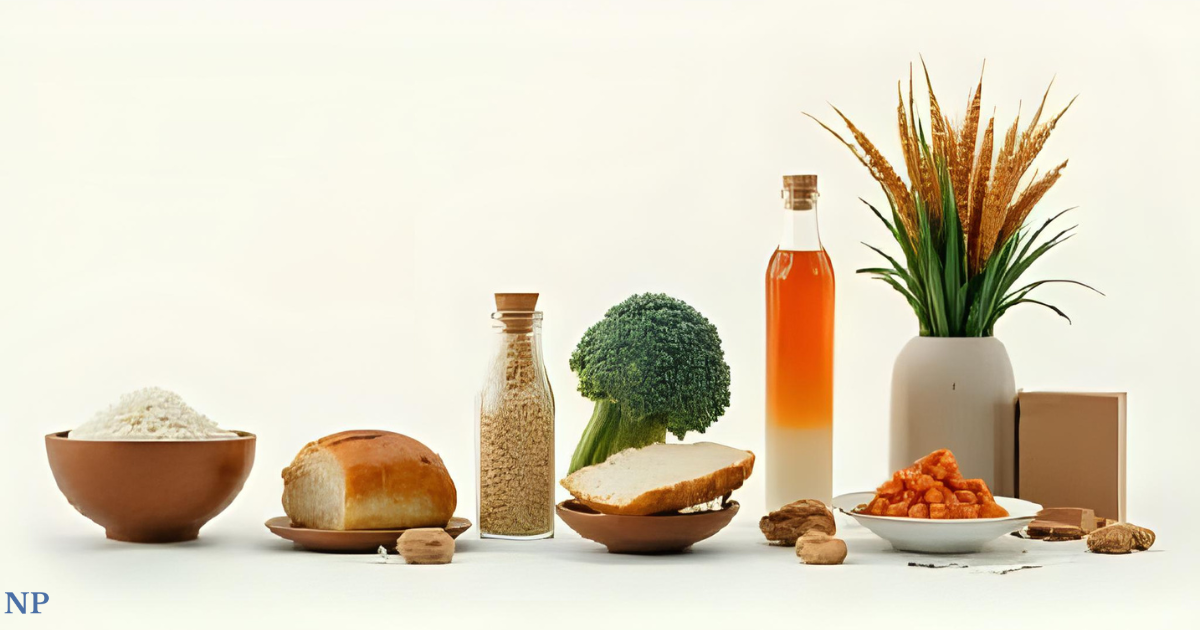
Through most of history, this was the script. Societies lived on carb-heavy staples—rice in Asia, bread in Europe, maize in the Americas, millet and yams in Africa, potatoes in the Andes. Anthropologists estimate that 60–80% of daily calories in traditional diets came from starchy staples.⁷ They were cheap, filling, and reliable fuel. Meat was rare, saved for feasts or survival.
Only in extreme environments did the pattern flip. Inuit communities lived on seal fat and fish; nomadic herders on the Mongolian steppe relied on meat and dairy. These weren’t wellness hacks. They were survival strategies dictated by geography and climate. Ironically, the very diets born of necessity are now rediscovered as “optimal” lifestyles.
Human genius was never about one perfect diet. Anthropologists note that we’re metabolically flexible, able to thrive on diets ranging from 10% to 90% carbohydrates depending on environment.⁸ Survival meant adaptability—making fuel from whatever was at hand.
Which makes abundance today such a strange twist. For the first time in history, humans can choose among endless fuels. We debate macros, track apps, and fine-tune diets—not because we must, but because abundance lets us. Food as fuel, once primal instinct, has become optional script.
And just as we rediscover the dignity of simplicity, technology tempts us into something stranger: food without story.
Food as Future — Eating Without Story
At home, I try to hold on to the traditional script: cooking from scratch, eating whole foods, savoring meals as more than fuel. But convenience sneaks in: a protein shake in a lunchbox, a delivery order on a hectic night. That tension at home mirrors a bigger shift, as food trends push toward efficiency, personalization, and frictionless delivery.
Personalization and Datafication. Diets tailored to DNA. Microbiome tests dictating grocery lists. Algorithmic menus that anticipate cravings before we articulate them.⁹ Food becomes data, optimized like a prescription. But when every plate is customized, does it still carry culture?
Sustainability and Climate Imperatives. With 8 billion mouths to feed, climate-conscious eating is urgent. Lab-grown meat, plant-based proteins, carbon-footprint calculators all push us toward diets framed as environmental duty.¹⁰ Progress, yes—but does eating risk becoming moral compliance instead of shared joy?
Convenience and Frictionless Delivery. Ghost kitchens, ten-minute delivery apps, subscription meal kits. The grocery run—once a weekly ritual—can now be skipped entirely.¹¹ Convenience feeds us, but it also shrinks the communal table. What happens when meals are consumed in transit, optimized for efficiency but stripped of occasion?
Functional and Enhancement Foods. The wellness industry is already a $1.8 trillion market.¹² From mushroom elixirs to adaptogenic lattes, snacks and drinks now promise sharper focus, calmer nerves, or gut health on demand. Food here is less about nourishment than performance—edible productivity hacks.
Each trend addresses real needs—health, sustainability, time scarcity. But together they raise a deeper question. If food once scripted virtue, belonging, or survival, what does it script when it becomes data, carbon accounting, logistics, and performance fuel?
My Verdict
Food has always been more than taste. It has been a script: of self-worth and belonging, of scientific precision and corporate engineering, of survival and sufficiency. My mushroom elixir isn’t just a drink; it’s a reflection of how far we’ve drifted—and how much we circle back.
From identity to science, back to fuel, and forward into a storyless future, food keeps rewriting its meaning. The real question isn’t which diet works best. It’s this: what script do we want food to write in the next chapter?
References
- Turner, B. (2010). The moralities of “clean eating” and discourses of discipline. Sociology of Health & Illness.
- Counihan, C., & Van Esterik, P. (2012). Food and Culture: A Reader. Routledge.
- Moss, M. (2013). Salt, Sugar, Fat: How the Food Giants Hooked Us. Random House.
- Monteiro, C. A., et al. (2019). Ultra-Processed Foods: What They Are and How to Identify Them. Public Health Nutrition.
- Pew Research Center (2023). Tracking Health: Who Uses Fitness and Nutrition Apps.
- Dunn, T. M., & Bratman, S. (2016). On Orthorexia Nervosa: A Review of the Literature and Proposed Diagnostic Criteria. Eating Behaviors.
- Cordain, L., et al. (2000). Plant-animal subsistence ratios and macronutrient energy estimations in worldwide hunter-gatherer diets. American Journal of Clinical Nutrition.
- Pontzer, H. (2021). Burn: New Research Blows the Lid Off How We Really Burn Calories, Lose Weight, and Stay Healthy. Avery.
- Zeevi, D., et al. (2015). Personalized Nutrition by Prediction of Glycemic Responses. Cell.
- McKinsey (2021). Cultivated Meat: Out of the Lab, Into the Frying Pan.
- Euromonitor (2023). The Future of Food Delivery.
- McKinsey & Co. (2023). The wellness industry: A $1.8 trillion global market.